
Common Chronic Wounds (For Patients & Caregivers)
1. Diabetic foot wounds
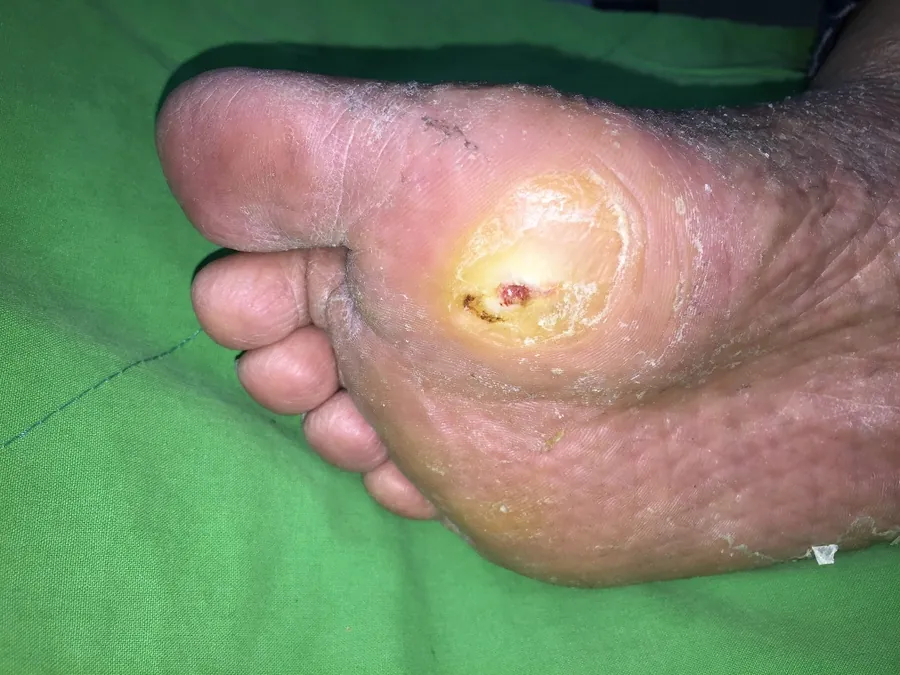
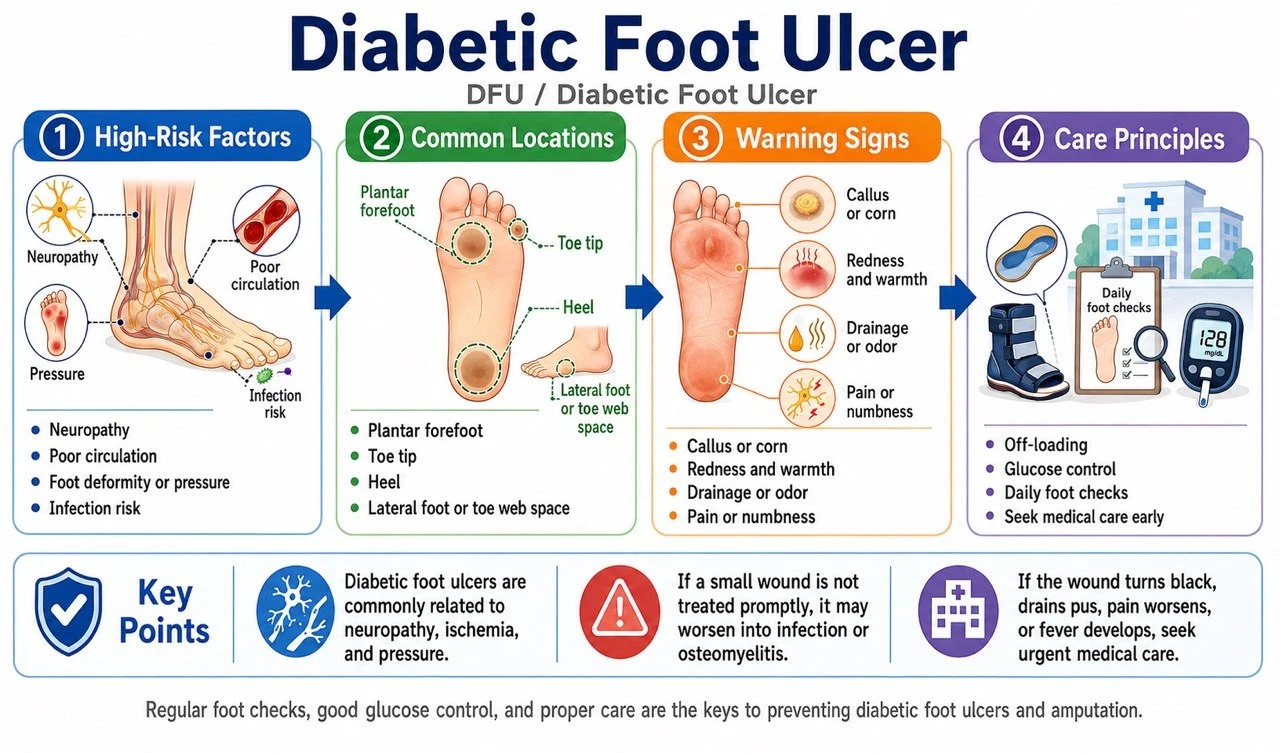
Common locations: Tips of the toes and between the toes; weight-bearing areas of the sole (ball of the foot, heel); the outer side of the big toe and bony bumps; spots where shoes rub or press; and under corns, thick calluses, or blisters.
Possible causes: Diabetic nerve damage dulls the feeling of pain and pressure; poorly fitting shoes, repeated rubbing, or too much pressure on the sole; foot deformity, thick calluses, or an abnormal way of walking; poor blood flow in the leg arteries; infection after a small wound, athlete's foot, an ingrown toenail, or cutting a corn yourself; and poorly controlled blood sugar.
What you might see or feel: Blisters, cracks, open sores, oozing, or black tissue; redness, swelling, warmth, or a bad smell around the wound; numb, tingling, or dulled feet; a foot that is cold, pale, or dark purple; a wound can be deep yet not hurt at all; sudden swelling, a change in shape, or one area of the foot clearly warmer than the rest.
Who is at higher risk: People who have had a diabetic foot ulcer or an amputation before; those with nerve damage, foot deformity, or thick calluses; kidney disease, dialysis, or peripheral artery disease; poor eyesight or limited mobility making foot self-checks hard; and long-term poor blood sugar control or smoking.
Daily care: Check the soles, toes, and spaces between the toes every day (use a mirror or ask a family member for help). Wear well-fitting, closed shoes and socks, and check inside shoes for objects before putting them on. Do not walk barefoot, do not cut corns or calluses yourself, and do not use corrosive liquids. Change dressings and take pressure off the wound as instructed — do not keep walking on a wound just because it "doesn't hurt." Control your blood sugar, quit smoking, and keep your appointments.
Do NOT manage alone: Any newly discovered diabetic foot ulcer; quickly spreading redness and swelling, pus, a foul smell, or fever and chills; a wound turning black, toes turning purple, or a foot suddenly going cold; a wound deep enough to show tendon or bone; a foot that suddenly becomes swollen, hot, or deformed (even without an obvious wound); or confusion, rapid breathing, or blood sugar clearly out of control.
Which specialist to see: Start with an integrated diabetic foot clinic, a wound care center, or a metabolism/endocrinology clinic. If poor circulation is suspected, get evaluated by cardiovascular or vascular surgery. Deep infection, dead tissue, or suspected bone infection needs infectious disease, orthopedics, or plastic surgery working together. (IWGDF 2023 diabetic foot guidelines)
2. Pressure injuries / bed sores
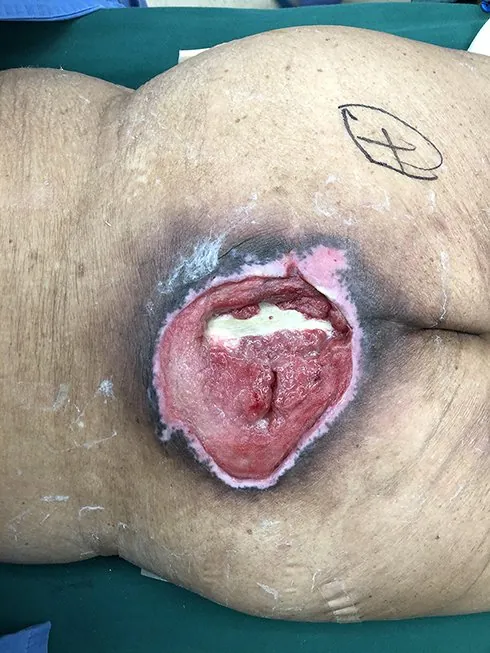
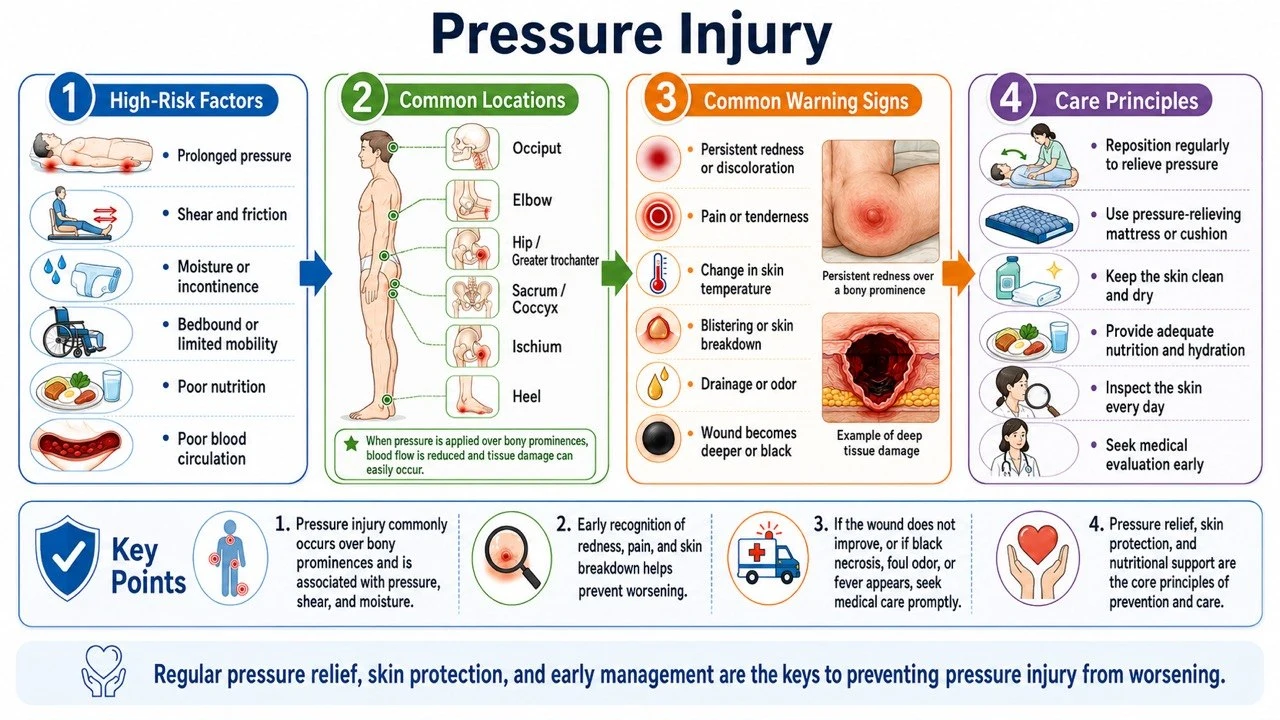
Common locations: The tailbone and the sitting bones of the buttocks; heels and ankles; the bony point of the hip; elbows, shoulder blades, and the bumps of the spine; the back of the head and the ears; and anywhere pressed by nasal tubing, oxygen masks, casts, or braces.
Possible causes: Pressure on the same spot for too long; the body sliding down in bed and dragging on the skin (shear); repeated rubbing against sheets or clothing; skin kept wet for long periods by urine, stool, or sweat; and poor nutrition, dehydration, or poor circulation.
What you might see or feel: On lighter skin, redness that does not fade; on darker skin, a purple-blue tint or deepening color; local pain, warmth, hardness, swelling, or a spongy feel; blisters, broken skin, or shallow sores; in severe cases the damage reaches into fat, muscle, tendon, or even bone; and there may be oozing, dead tissue, a bad smell, or infection.
Who is at higher risk: People who are bed-bound, use a wheelchair, or cannot turn themselves; those with stroke, spinal cord injury, dementia, or reduced consciousness; impaired sensation, serious illness, or recent surgery; incontinence of urine or stool; and people who are elderly, very thin, obese, malnourished, or have had a pressure injury before.
Daily care: Change position on schedule according to the care plan and avoid lying or sitting directly on the injured area. Use professionally assessed pressure-relieving mattresses, cushions, or heel-suspension devices. Check bony areas and equipment contact points daily. Keep the skin clean and dry and manage incontinence properly. Pay attention to protein, calories, and fluids (a dietitian can help if needed). Reduce dragging and friction when moving the person.
Do NOT manage alone: Redness, purple, or black areas that do not fade; a blister, broken skin, or an open sore that has already formed; a wound getting deeper fast, black tissue, pus, or a foul smell; spreading redness, fever, chills, or worsening confusion; visible fat, tendon, or bone; or not knowing how to turn the person safely or choose pressure-relief equipment.
Which specialist to see: A wound care center, plastic surgery, general surgery, rehabilitation medicine, family medicine, home nursing, or long-term-care wound nursing. Deep dead tissue or suspected bone infection needs surgical cleaning and infectious disease input. In its early stage a pressure injury may show only a change in color or feel, while deeper tissue is already damaged. (NHS pressure injury education)
3. Wounds from poor artery circulation
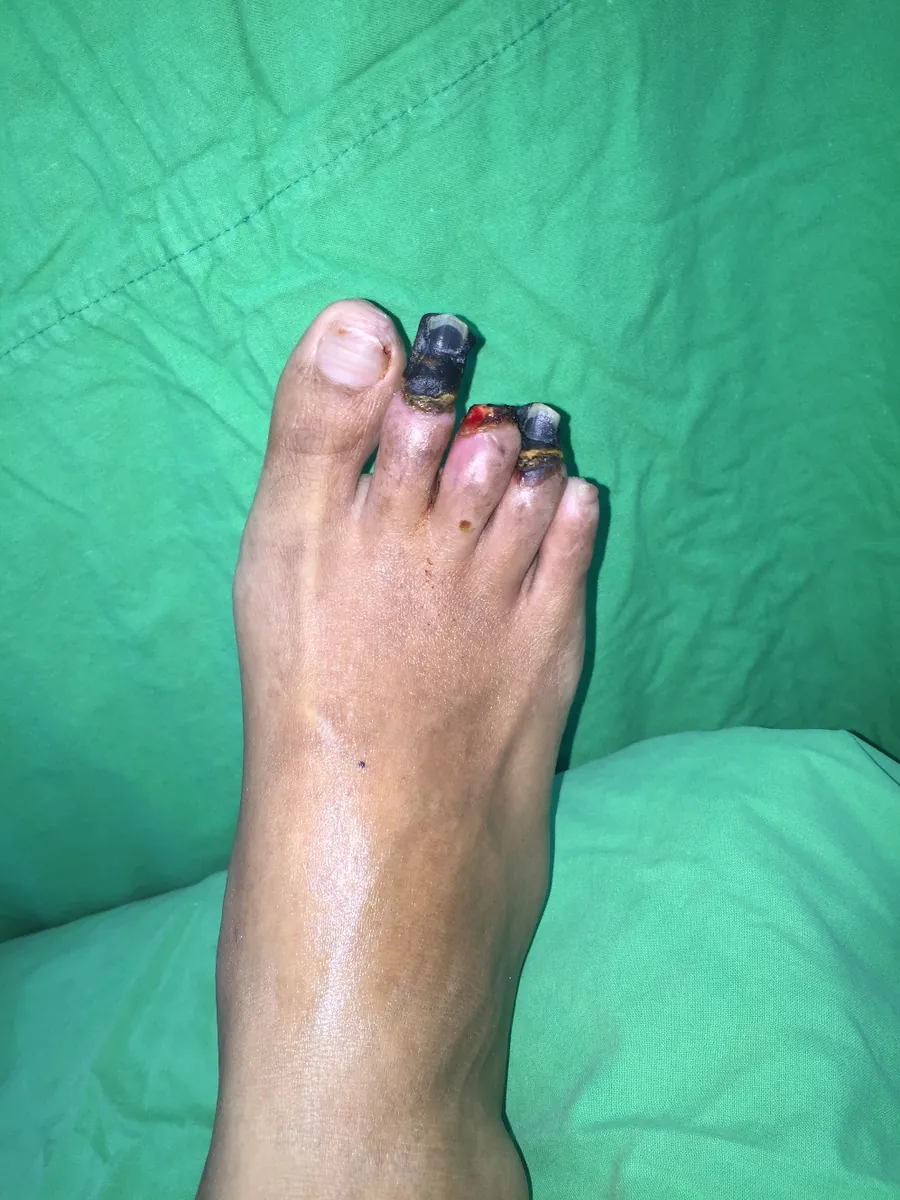
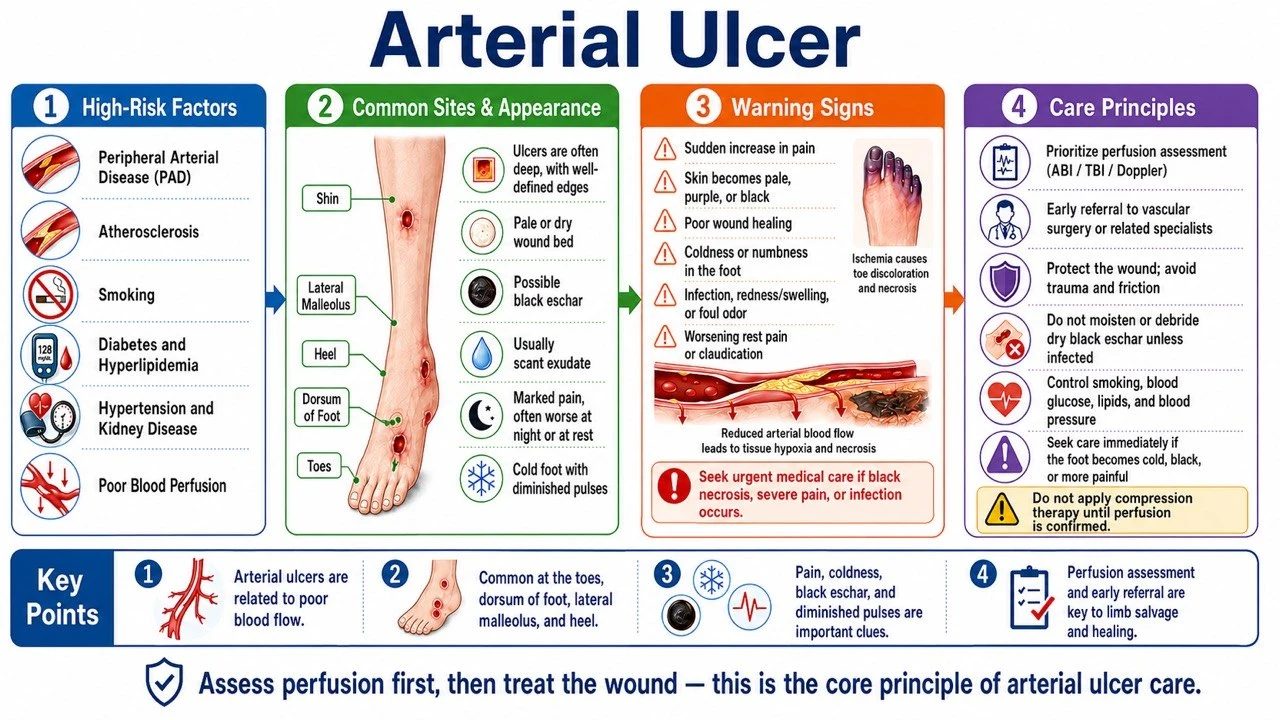
Common locations: Tips of the toes and between the toes; the heel; the outer side of the foot; the outer ankle; and spots where shoes rub or a minor injury occurred.
Possible causes: Peripheral artery disease and hardening of the arteries; narrowed or blocked vessels starving the tissue of blood; diabetes, smoking, high blood pressure, or high cholesterol; and blood clots or other blood vessel diseases.
What you might see or feel: A sore with fairly sharp edges, like a punched-out hole; a base that is pale, dry, blackened, or dead; not much oozing but often very painful; pain or paleness that worsens when the leg is raised and eases slightly when it hangs down; a cold, numb foot with shiny skin and less hair; calf pain when walking that eases with rest; and a weak pulse or no pulse you can feel.
Who is at higher risk: Smokers; people with diabetes, high blood pressure, or high cholesterol; heart disease, stroke, or kidney disease; the elderly; and anyone who has had leg vessel surgery or peripheral artery disease.
Daily care: Protect the feet from bumps, burns, and walking barefoot. Keep them comfortably warm but do not use hot water bottles or electric blankets directly on the skin. Control blood pressure, sugar, and cholesterol, and quit smoking. Do not use elastic bandages or high-compression stockings on your own. Have the blood flow tested (ankle-brachial index, vascular ultrasound).
Do NOT manage alone: Severe foot pain even at rest, or pain that wakes you at night; toes or a foot suddenly turning cold, pale, purple, or numb; blackening, gangrene, a foul smell, or rapid worsening; sudden loss of feeling or movement; a wound that simply will not heal; and never apply compression wrapping yourself before the blood flow has been assessed.
Which specialist to see: Cardiovascular surgery, vascular surgery, or a wound care center with vascular testing. A limb that suddenly turns cold, painful, pale, or numb, or stops moving, may be acute limb ischemia — go to the emergency department immediately. Until blood flow is restored, dressings alone can rarely heal these wounds. (NHS peripheral arterial disease)
4. Wounds from poor vein circulation
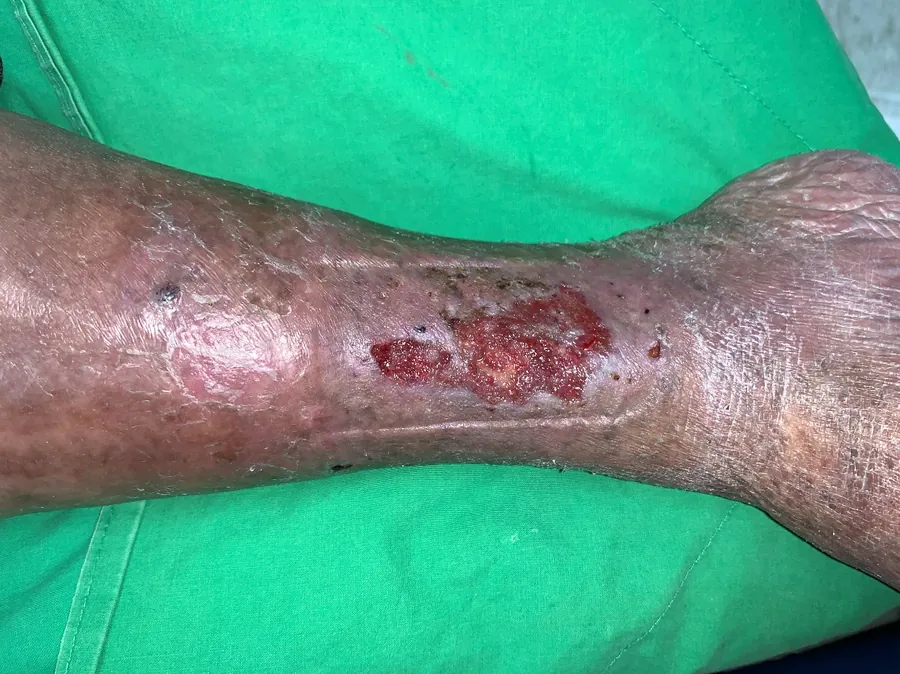
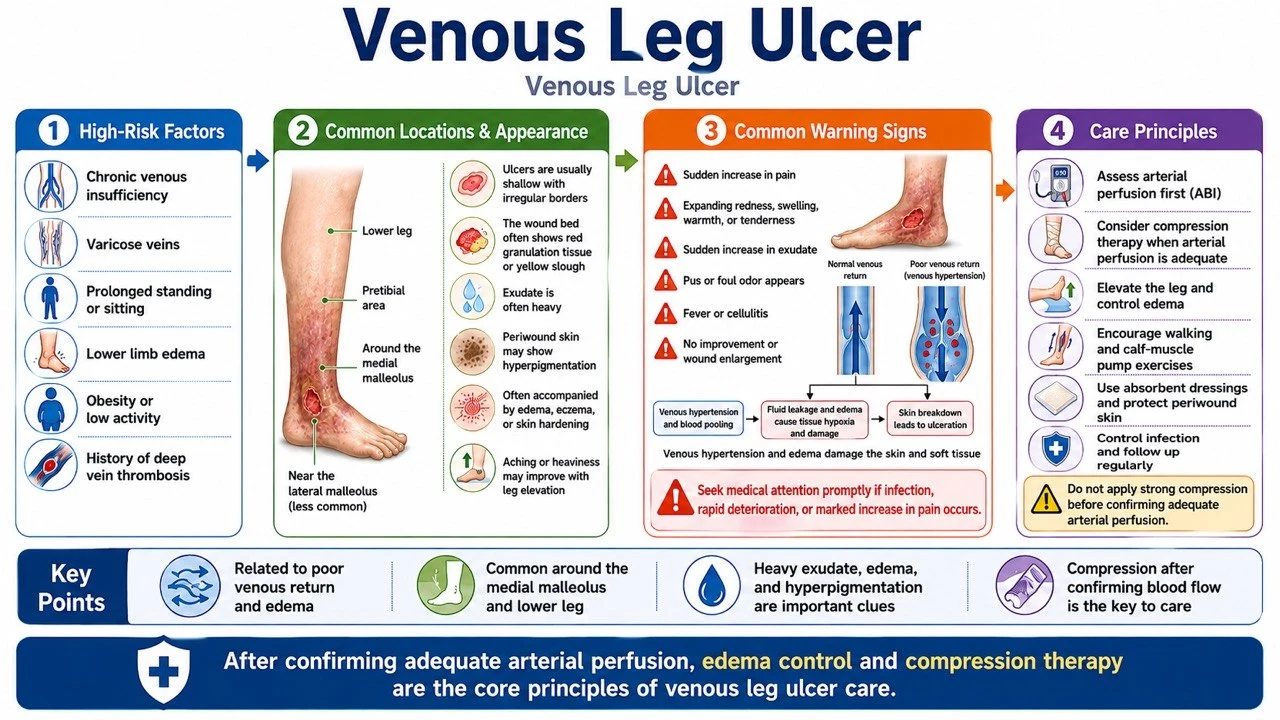
Common locations: The lower part of the calf; just above the ankle (especially the inner side); usually not mainly on the toe tips or the sole.
Possible causes: Leaky valves in the leg veins; varicose veins; a past deep vein clot (DVT); long hours standing or sitting, or weak calf muscle pumping; and long-term high pressure in the veins damaging the skin and tissue.
What you might see or feel: A fairly shallow sore with an irregular shape; more oozing; swollen, heavy, achy calves and ankles; surrounding skin that is brownish, darkened, and hardened; dryness, flaking, itching, or vein-related eczema; often with varicose veins; and discomfort that eases when the legs are raised.
Who is at higher risk: People with varicose veins or a previous vein ulcer; a past deep vein clot; long hours standing or sitting, or low activity; obesity, older age, or previous leg surgery; and long-term calf swelling.
Daily care: Have the blood flow assessed first, and let a professional decide whether compression therapy is right for you. Raise your legs, walk, and move your ankles as instructed. Avoid long stretches of sitting or standing. Protect the surrounding skin from scratching. Change dressings on schedule to manage the oozing. After healing, wear medical compression stockings as prescribed to prevent the ulcer coming back.
Do NOT manage alone: Wrapping the leg tightly yourself before the artery flow has been checked; a foot that is cold and pale with severe pain or a weak pulse; redness, warmth, and pain spreading quickly, fever, or foul-smelling pus; one calf suddenly becoming clearly swollen and painful (a deep vein clot must be ruled out); or a sore quickly growing, turning black, or bleeding heavily.
Which specialist to see: A wound care center, cardiovascular surgery, vascular surgery, or general surgery. Compression therapy is a key treatment for vein-related wounds, but the artery blood flow must be confirmed adequate first. (NHS venous leg ulcers)
5. Wounds linked to long-term swelling (edema)
Common locations: The calves, ankles, and tops of the feet; an arm or leg with lymphedema; skin folds or areas that keep weeping fluid; and limbs that have had lymph node surgery or radiation therapy.
Possible causes: Long-term vein problems; a lymph system that is abnormal from birth or damaged later; cancer surgery, lymph node removal, or radiation therapy; heart, kidney, or liver disease; and inactivity, obesity, or repeated infections.
What you might see or feel: A swollen, heavy, tight-feeling limb; early on, pressing leaves a dent; later the skin becomes thick, hard, rough, or folded; skin that cracks, blisters, or keeps weeping clear fluid; clothes, shoes, rings, and watches getting tight; and repeated bouts of cellulitis (skin infection).
Who is at higher risk: People who have had cancer surgery, lymph node removal, or radiation; chronic vein disease; poor heart, kidney, or liver function; obesity, inactivity, or long-term bed rest; and anyone with repeated cellulitis.
Daily care: Keep the skin clean and moisturized to prevent cracking. Avoid cuts, insect bites, burns, and scratching. Exercise, elevate, or use compression products as professionally instructed. Treat athlete's foot, moist toe spaces, and small wounds early. Check the swelling, temperature, color, and any weeping every day. The cause of the swelling must be found first — you cannot rely on water pills or wrap the limb yourself.
Do NOT manage alone: One limb suddenly becoming swollen, painful, or discolored; skin that suddenly turns red, hot, and painful with fever and chills; swelling together with trouble breathing, chest pain, or much less urine (an emergency); heavy weeping, a bad smell, pus, or rapid spreading; and never apply strong compression before the artery circulation and the cause of the swelling have been confirmed.
Which specialist to see: Start with family medicine or internal medicine to find the cause of the swelling, then get referred to cardiology, nephrology, gastroenterology/hepatology, vascular surgery, rehabilitation medicine, a lymphedema therapy team, or a wound care center. (NHS lymphoedema)
6. Wounds after radiation therapy
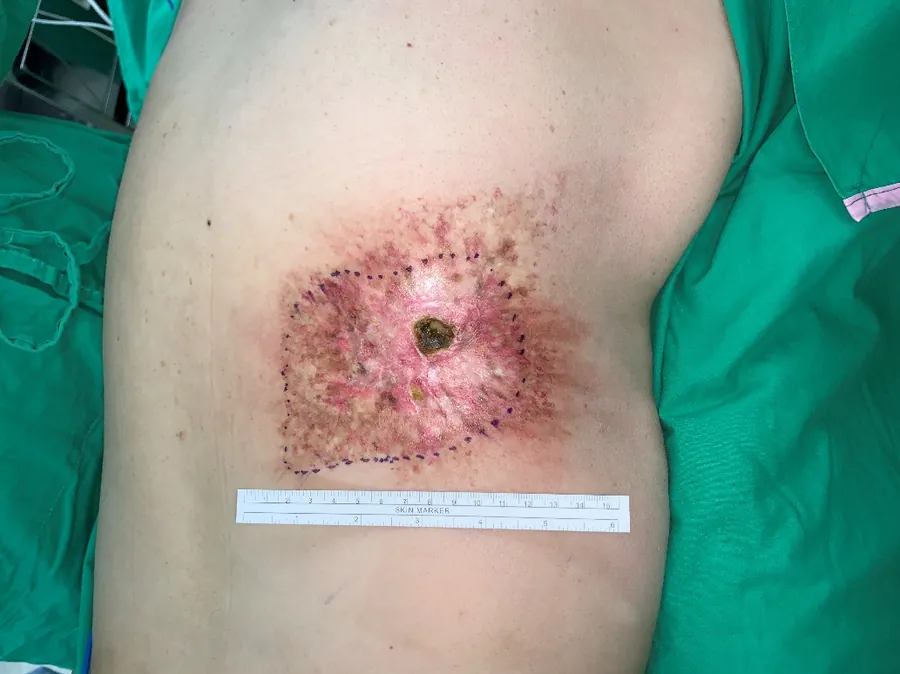
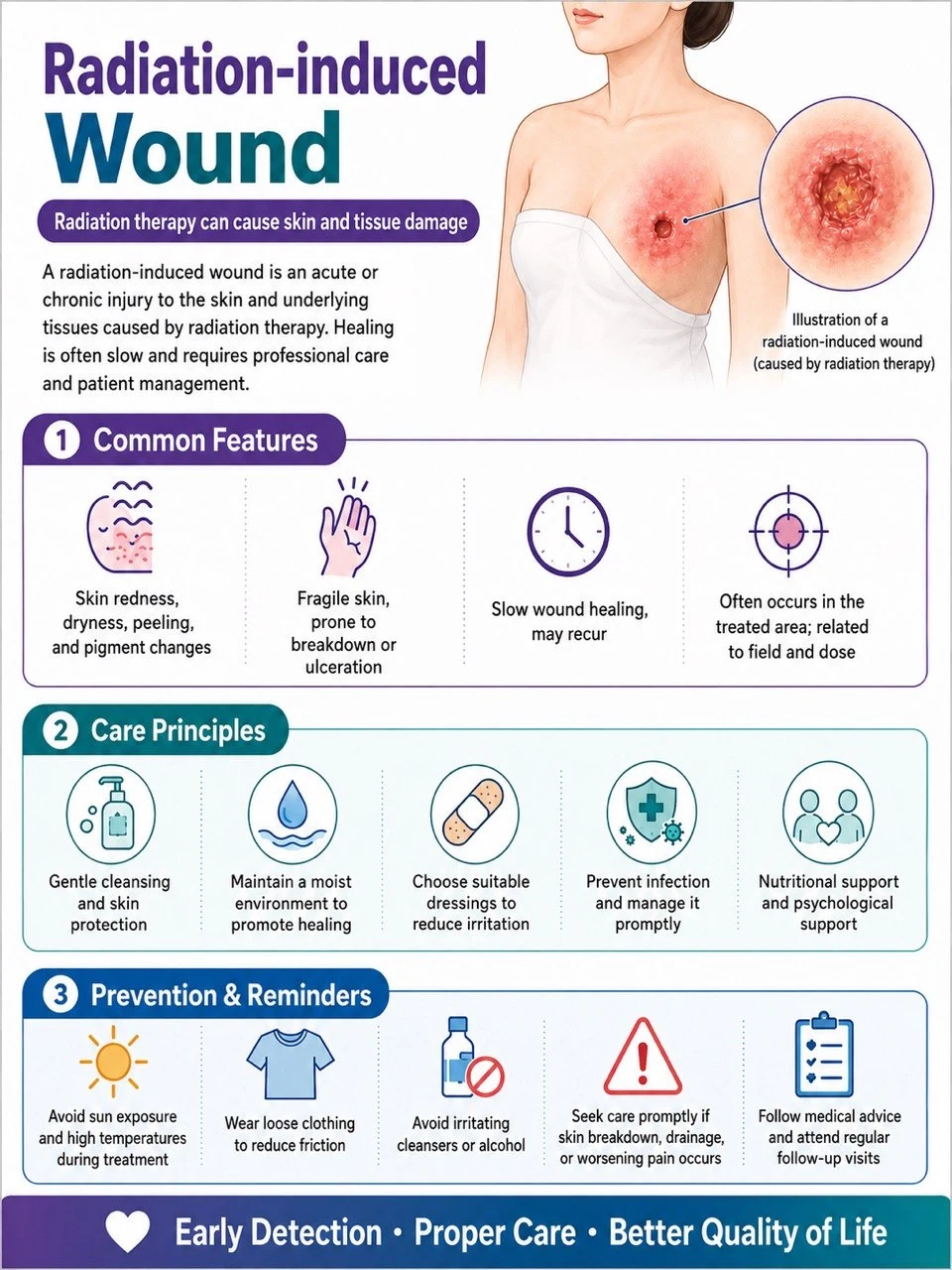
Common locations: Skin within a past radiation field; the breast, chest wall, head and neck, pelvis, or limbs; skin folds; and where a surgical scar overlaps the radiation area.
Possible causes: Radiation damages the skin's tiny blood vessels and deeper tissue; acute skin reactions during treatment; scarring (fibrosis), poor blood supply, or tissue death appearing months to years later; breakdown triggered by surgery, rubbing, or infection; and a cancer coming back can also look like a non-healing wound, which must be told apart.
What you might see or feel: Skin that is red or darkened, dry, flaky, and painful; moist broken skin, weeping, or an open sore; skin that over time becomes thin, hard, and loses its stretch; widened tiny blood vessels and color changes; and skin that keeps cracking open, getting infected, or healing slowly.
Who is at higher risk: People who had high-dose or repeated radiation; those also on chemotherapy, targeted therapy, or immunotherapy; diabetes, smoking, poor nutrition, or poor circulation; radiation areas with skin folds, rubbing, or surgical wounds; and anyone who had severe radiation skin inflammation before.
Daily care: Keep the area clean and avoid rubbing, scratching, and sun exposure. Wear loose, soft clothing. During radiation treatment, ask the radiation team first before using any ointment or dressing. Do not use harsh antiseptics or products with unknown ingredients. Keep a record of wound changes. Stay alert for skin changes that appear months or years after radiation ends.
Do NOT manage alone: Large areas of moist peeling skin, severe pain, or heavy weeping; ulceration, bleeding, pus, or a bad smell; a wound still worsening after radiation has finished; a new lump or new wound appearing in the treated area months or years later; damage reaching muscle or bone; and fever, chills, or feeling unwell all over.
Which specialist to see: Contact your original radiation oncology or cancer team first; they may bring in plastic surgery, dermatology, a wound care center, medical oncology, or surgery. Suspected cancer recurrence needs imaging or a biopsy. (NCI radiation therapy side effects)
7. Cancer-related wounds
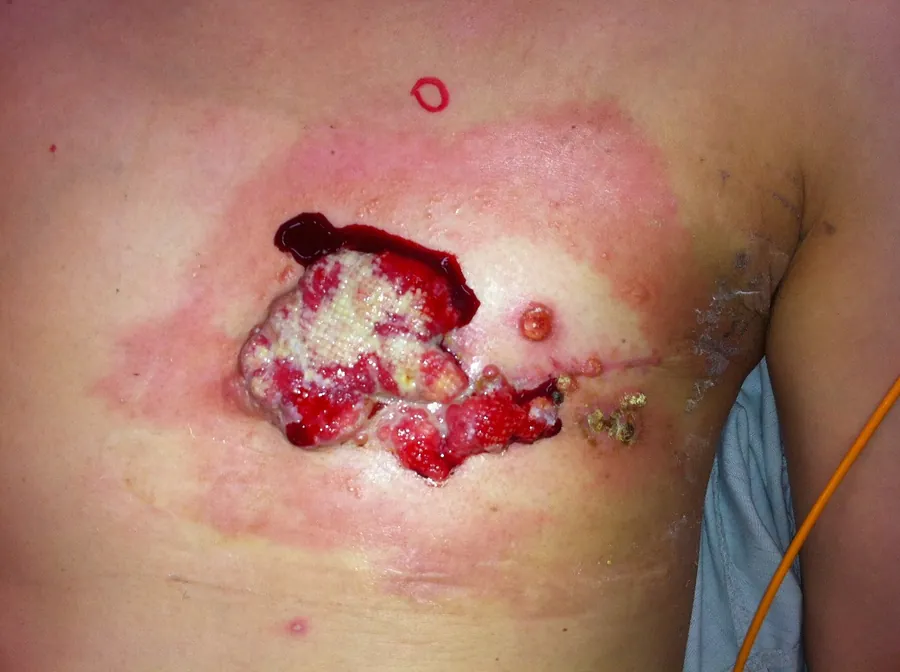
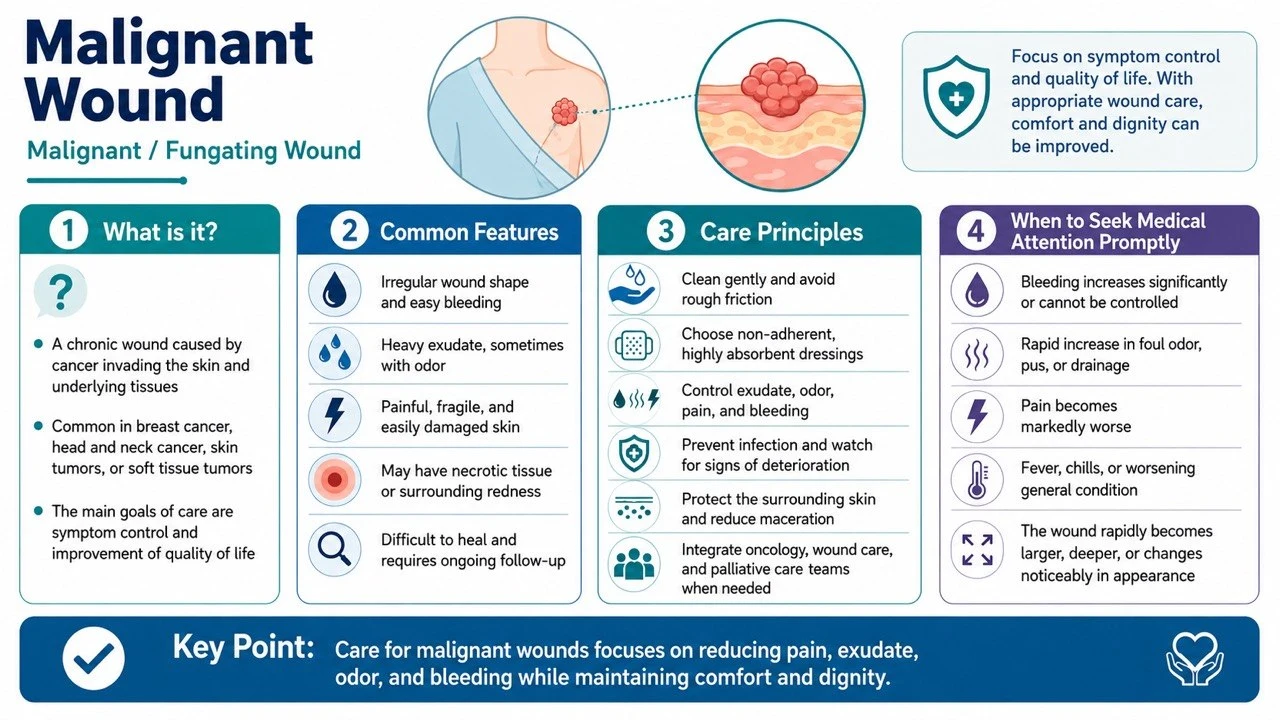
Common locations: The breast or chest wall; the head and neck; where a skin cancer started; where a tumor is close to the skin or has spread; and near surgical scars where cancer has come back.
Possible causes: A tumor growing through the skin; the tumor pressing on and destroying tiny blood vessels, starving the tissue; cancer coming back or spreading to the skin; and treatment lowering immunity, causing infection or poor healing.
What you might see or feel: An irregular lump, an open sore, or a mushroom-like growth; tissue that oozes blood or bleeds at a light touch; heavy weeping, dead tissue, and a strong odor; pain, itching, or hardening of the surrounding skin; gradual enlargement, sometimes with infection; and changes in appearance that can be emotionally and socially distressing.
Who is at higher risk: People with skin cancer, breast cancer, or head and neck cancer; tumors close to the skin; locally advanced or metastatic cancer; recurrence near a scar; and those with lowered immunity, poor nutrition, or multiple treatments.
Daily care: Change dressings gently and avoid rubbing or tearing. Use dressings that do not stick to the wound, and manage weeping and odor as professionally advised. Have something ready to stop bleeding before each dressing change. Record the bleeding, weeping, odor, pain, and size. Pain, odor, and bleeding can all be treated — never hide them out of embarrassment. The goal of care may be comfort and quality of life rather than complete healing.
Do NOT manage alone: Repeated or heavy bleeding; spurting blood or bleeding that pressure cannot stop (call emergency services immediately); rapid growth, spreading dead tissue, or clearly increasing pain; heavy weeping, a foul smell, pus, or fever; a new lump, a new sore, or a scar breaking open; and never cut off protruding tissue or scrub the wound hard yourself.
Which specialist to see: Your original cancer team (medical oncology, surgery, radiation oncology); you can also seek help from a wound care center, plastic surgery, dermatology, and the palliative care team. (Macmillan fungating cancer wounds)
8. Wounds that have not healed for a long time
Common locations: Anywhere on the body; most often the calves, ankles, feet, and toes; bony spots or areas under long-term pressure; surgical incisions or old injury sites; previously irradiated areas; and spots that keep getting inflamed and weeping.
Possible causes: Diabetes, infection, or a retained foreign object; poor artery or vein circulation; long-term pressure, rubbing, or swelling; continuing to bear weight on the wound without offloading; poor nutrition, anemia, kidney disease, or immune problems; steroids or immune-suppressing medicines; inflammatory diseases, vasculitis, or unusual skin conditions; and cancer or radiation damage.
What you might see or feel: No shrinking for weeks, or actual enlargement; repeatedly scabbing over and breaking open again; ongoing weeping, bleeding, pain, or odor; a base with yellow or black tissue or unusual overgrowth; surrounding skin that is red, swollen, hardened, or discolored; and pain out of proportion to how it looks, raised edges, easy bleeding, or an unusual appearance.
Who is at higher risk: People with diabetes, blood vessel disease, or long-term swelling; those bed-bound or with limited mobility; the elderly, malnourished, or smokers; kidney disease, dialysis, or weakened immunity; cancer or previous radiation; and long-term steroid or immune-suppressing medicines.
Daily care: Take photos at a fixed angle, distance, and lighting to track the wound. Clean and dress it as professionally instructed and protect the surrounding skin. Avoid switching ointments frequently or mixing in home remedies. Get enough nutrition, protein, and fluids. Control blood sugar, quit smoking, and keep pressure off the wound. The real need is to find out WHY it is not healing — not just to keep changing dressings.
Do NOT manage alone: No improvement, or continued spreading, despite proper care; repeated bleeding, raised edges, or abnormal tissue overgrowth; a sudden jump in pain, spreading redness, pus, a foul smell, or fever; blackening, or visible tendon or bone; a foot that is cold, purple, numb, or hard to move; and any wound that looks unusual or has no clear cause (it may need cultures, imaging, or a biopsy).
Which specialist to see: Start with a wound care center, plastic surgery, general surgery, dermatology, or family medicine for a full assessment, then get referred by cause — blood flow problems: cardiovascular/vascular surgery; diabetic foot: metabolism and the diabetic foot team; infection: infectious disease; pressure injuries and mobility problems: rehabilitation medicine, home nursing, or long-term care; suspected cancer or radiation damage: oncology, radiation oncology, or the relevant surgical specialty; unusual inflammatory skin wounds: dermatology or rheumatology/immunology.
Sources: IWGDF 2023, NHS (pressure injuries / peripheral arterial disease / venous leg ulcers / lymphoedema), NCI, Macmillan. Last updated: 2026-08-23